
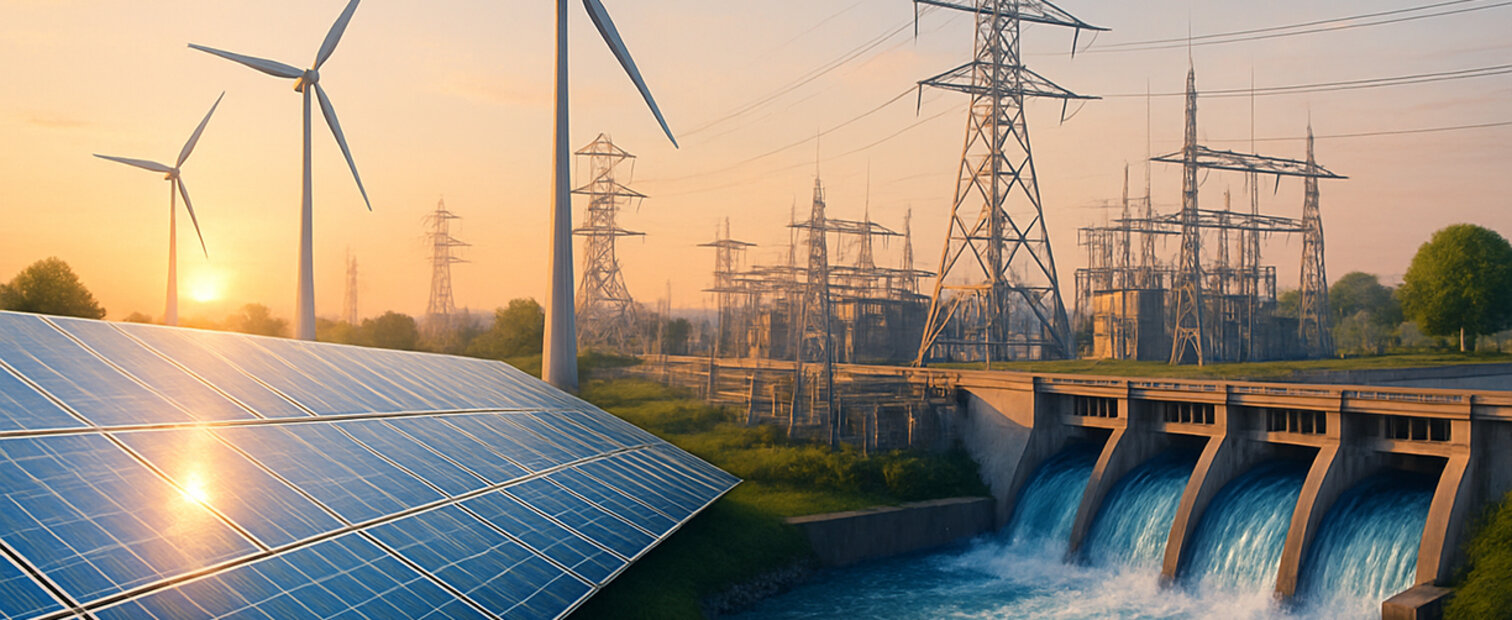
Renewable energy
Fuse-link technology for a sustainable energy future
Expertise in the energy transition from the very start
Protection technologies for volatile networks
Process coverage from generation through toconsumption
Proven in solar, wind,hydro,geothermal andbiomass
Intro
The energy transition is fundamentally changing our energy systems. Wind and solar power plants generate electricity in a decentralized and variable manner, and not always when it is needed. At the same time, electricity consumption is rising due to heat pumps, electric vehicles and digitalization. Battery storage systems and smart grids balance out peak demand and ensure a reliable supply.
Safety and stability for modern energy systems
- Protection against overload and short circuits
- For high currents and dynamic load cycles
- Protection for decentralized and volatile energy generation
- Prevention of damage and total failure
The changing energy supply landscape – new requirements for protection
To meet the growing demand, electricity generation is being further expanded, with renewable energy sources playing a key role.
High currents, complex load changes and new grid structures place particular demands on safety and reliability. Fuse-links protect installations, storage facilities and grids from overloads and short circuits, minimize damage and prevent total failures – and form the backbone of a stable energy system.
As an experienced manufacturer of fuse-links and accessories, SIBA GmbH is your expert partner for fuse-link technology. With decades of experience, extensive consulting services and partnerships with major customers, SIBA delivers reliable, high-quality solutions for secure and stable energy systems.
Are you planning projects for future energy supply?
Put your trust in the expertise of SIBA GmbH.
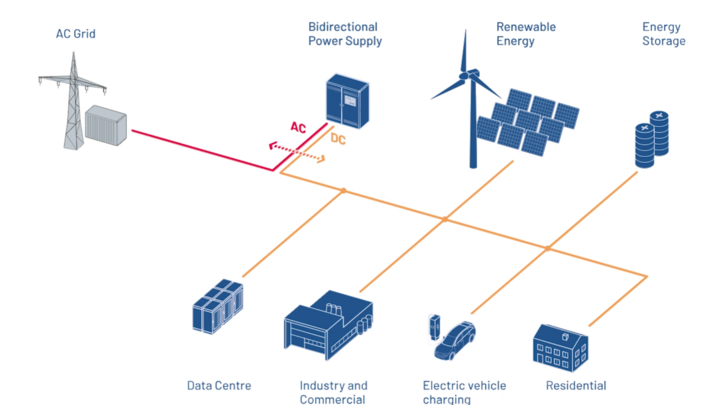
Ready for DC – in partnership with the ODCA
The Open Direct Current Alliance (ODCA) brings together industry, academia and research to advance direct current grids as a key technology for a resource-efficient and carbon-neutral industry worldwide.
As part of the ODCA, SIBA contributes its expertise in fuse technology and supports safe, standardized and market-ready DC solutions.
- Energy Storage, Photovoltaics & Wind Energy
- Industry & Industrial DC Applications
- Power Electronics & DC Switchgear
- Short-Circuit and Overload Protection
Full-area protection for semiconductors – with gS (gRL)
Our gS (gRL) fuse-links combine the best of both worlds: proven line protection (gG) and particularly fast short circuit protection for semiconductors (aR). This ensures reliable protection for both the supply line and the connected power electronics – all in a single component. At rated voltage and also in the event of overvoltages within the tolerance range, the protection is provided by a combination of overload and short-circuit protection.
Thanks to their innovative fusible conductor design, gS (gRL) fuse-links offer high cycle stability. Developed even before the relevant standards were established, they demonstrate SIBA’s long-standing expertise in the field of semiconductor protection.
gS (gRL) type fuse-links are designed for rated voltages of up to 800V DC and are tested in accordance with IEC 60269-4. They can easily withstand short-term overvoltages of up to 880V DC and continue to safely interrupt short circuit currents within the tolerance range at the specified overvoltages.
Expanded range
New to the range: our expanded gS (gRL) range for 800V DC – available in sizes:
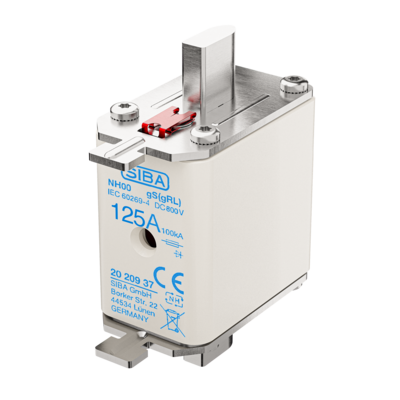
2020937
- Size:
NH00
Rated current:
35A - 125A
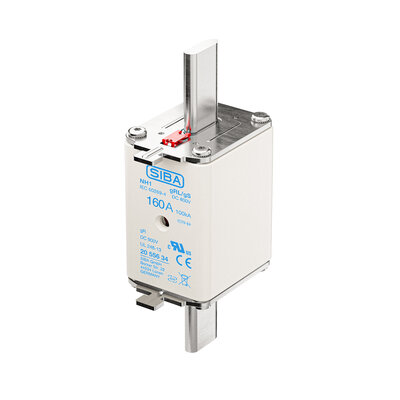
2055634
- Size:
NH1
Rated current:
32A - 160A
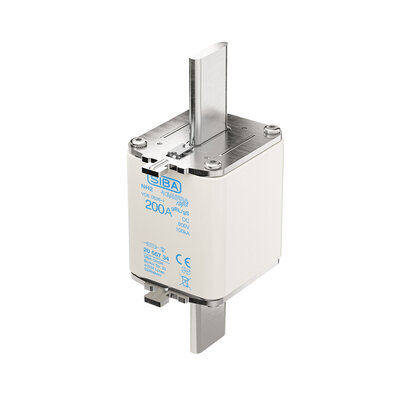
2055734
- Size:
NH2
Rated current:
160A - 250A
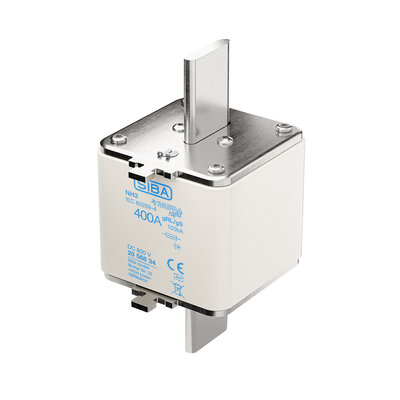
2056834
- Size:
NH3
Rated current:
200A - 400A
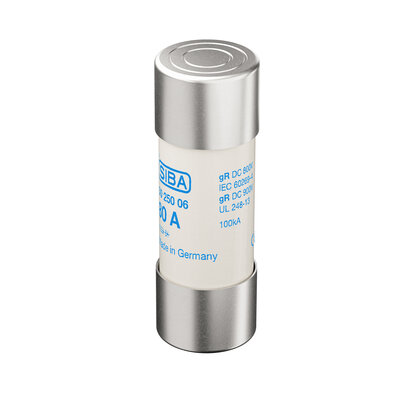
5025006
- Dimensions:
22x65
Rated current:
20A - 80A
Smart grids as the key to the energy transition – properly protected
The European energy transition and the goal of achieving climate neutrality by 2050 present the electricity grid with new challenges:
- Increasing demand for electricity
- Volatile generation via renewable energy sources
- A wide range of new consumers such as electric vehicles and heat pumps
To meet these requirements we need not only a massive expansion of the grid, but also its intelligent modernization – the so-called smart grid.
A smart grid is a digitalized electricity network that collects and processes information in real time.
Measurement, control and communication technology enables a dynamic balance between generation, consumption and storage. This allows renewable energy to be effectively integrated and bottlenecks to be avoided.
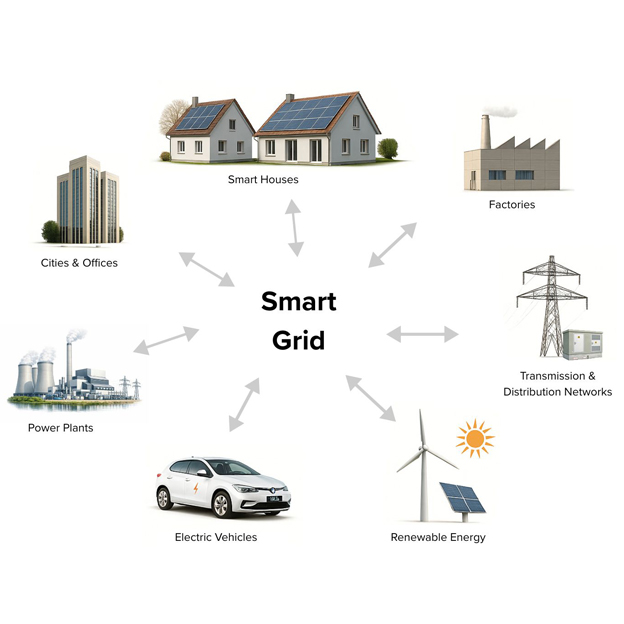
The role of the smart grid in grid expansion
- Integration of renewable energy:
Smart grids balance out fluctuations and ensure that wind and solar power are fed efficiently into the grid. - Load management:
Flexible consumers can be controlled to reduce peak loads and prevent grid overloads. - Transparency and automation:
Real-time data improves security of supply and makes it easier to diagnose faults.
Insights & inspiration
The new role of the household in the energy transition
Renewable energy and modern energy technology are transforming everyday life in private households. With heat pumps, solar panels, battery storage systems, electric vehicles and smart metering, households are becoming active energy hubs: They generate, store and manage their own electricity.

Heat pumps
Heat pumps use renewable energy instead of fossil fuels, thereby reducing heating costs and making homes independent of gas or oil. When combined with a photovoltaic system, the electricity required can be generated directly from their own roof, saving both money and carbon emissions.
Home storage
A home storage unit allows solar power to be used in the evenings as well, while electric vehicles can be charged using low-cost solar power and may even serve as mobile storage units in the future.
Smart metering
Smart metering provides transparency regarding energy consumption, and automatically controls appliances when home-generated or cheaper electricity is available.
Households as drivers of the energy transition
They are thus moving from being consumers to becoming active drivers of the energy transition – with more independence, lower costs and a smaller carbon footprint.
The energy transition is driving a significant expansion of photovoltaics worldwide. Solar power systems are becoming increasingly larger and more efficient, both in residential areas and in industrial and commercial zones. They play a key role in the energy transition and make a significant contribution to the decentralized electricity supply.
However, with the rapid growth of PV technology, designers, operators and electrical contractors are facing new challenges.
The focus is on issues such as:
Wind energy is one of the cornerstones of renewable electricity generation in Europe. It plays a key role in replacing fossil fuels both on land and at sea. For years, many countries have been making a specific effort to expand their wind power capacity to make their energy systems more climate-friendly and less reliant on external sources. Without wind energy, the goal of a climate-neutral electricity supply by 2050 would not be realistically achievable, as it is a key driver of decarbonization.
For wind farms to be able to supply electricity reliably, grid protection technology plays just as important a role as the generation process itself. Each individual wind turbine is equipped with a transformer which, for example, steps up the generator voltage to the medium-voltage level.
Reliable protection for stable wind power generation
High-voltage high-performance fuse-links are essential for ensuring operational safety. They protect transformers and cable systems from short circuits. If faults occur in individual turbines, their impact is limited to that specific area, allowing the rest of the wind farm to continue generating electricity. In this way, high-voltage fuse-links not only ensure the availability and stability of wind power generation, but also play a crucial role in enabling wind energy to be integrated into the grid in an economical and reliable way.
Flexible – but not consistent
The energy transition depends on the massive expansion of renewable energy sources such as solar and wind power. However, their greatest strength, i.e. independence from fossil fuels, also presents a key challenge:
They do not generate electricity at a constant rate, but depending on weather and the time of day.
While the sun feeds large amounts of energy into the grid at midday, a shortage can suddenly occur in the evening when consumption rises and the sun is no longer shining. Without reliable energy storage, this is precisely where massive problems may occur.
- Unstable networks
- Overloads caused by feed-in peaks
- Supply shortages during periods of low generation
The consequences are serious
Industrial processes could grind to a halt, machinery could break down, and consumers could face power cuts and fluctuations in supply quality in their daily lives. Even a single imbalance between generation and consumption can cause widespread grid disruptions, or even blackouts.
Balancing generation and consumption
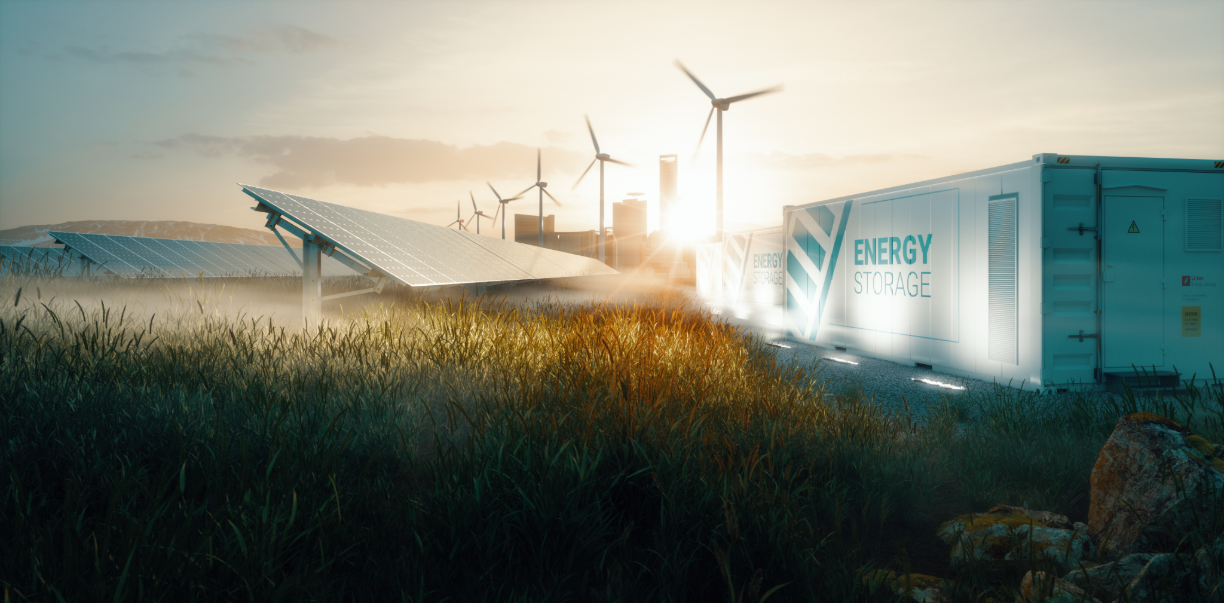
Modern Battery Energy Storage Systems (BESS) balance fluctuations between generation and consumption, store excess energy and make it available again when needed. In this way, they stabilize grids, increase supply reliability and make renewable energy suitable for everyday use in the first place.
However, as system size increases, so do the requirements for safety and protection. In BESS, high currents interact with sensitive electronics. Short-circuits or overloads can cause significant damage.
Fuse-Links play a central protective role here. In addition to reliably shutting down the system in the event of a fault, they limit the short-circuit current, thereby reducing mechanical and thermal stresses in the system. This enables a more cost-effective design of the BOS components and lowers total system costs – especially for large BESS systems – without compromising safety.
The energy transition towards climate neutrality by 2050 presents a range of technical, economic and social challenges across Europe, and places the grids in a dual role: They need to be significantly expanded to handle the increased volume while being intelligently modernized to cope with volatility and decentralization. As well as investment in transmission grids, distribution grids must not be allowed to become bottlenecks. The rise of e-mobility and heat pumps is placing a significant strain on local distribution networks. They need to be consolidated, automated and digitized (smart grids, controllable local distribution transformers and digital control systems).
Without high- and low-voltage fuse-links capable of withstanding high loads, it would be impossible to achieve a safe, cost-effective and stable grid expansion. They are the “invisible protective layer” of the energy transition – and are decisive in ensuring that investments in grids and renewables are not jeopardized by avoidable outages.
- High-voltage, high-rupturing capacity fuse-links provide essential protection for medium-voltage and distribution transformers. In the event of a short circuit or overload, they prevent total failure, which would cause massive delays to the expansion of the grid.
- On the low-voltage side, the connection of many decentralized systems such as heat pumps, charging points and solar panels places more strain on local grids. Selectively graded low-voltage high-performance fuse-links ensure that, upon overload or short circuit, only the affected circuit is cut off rather than entire road sections.
As the share of renewables grows, so does volatility, making a reliable, multi-layered protection strategy all the more important – fuses form the basis for resilience and security of supply.
Fuse-links
Comprehensive protection with SIBA fuse-links.
Fuses
Load switch-fuse-link combination
A commonly used switching device for protecting the power transformer is the load switch-fuse-link combination (SSK). To complement this, specific versions of SIBA-DIN high-voltage fuse-links have been developed, which have been optimized to work in conjunction with switchgear in terms of short switch opening times and low inrush currents: SIBA SSK fuse-links.
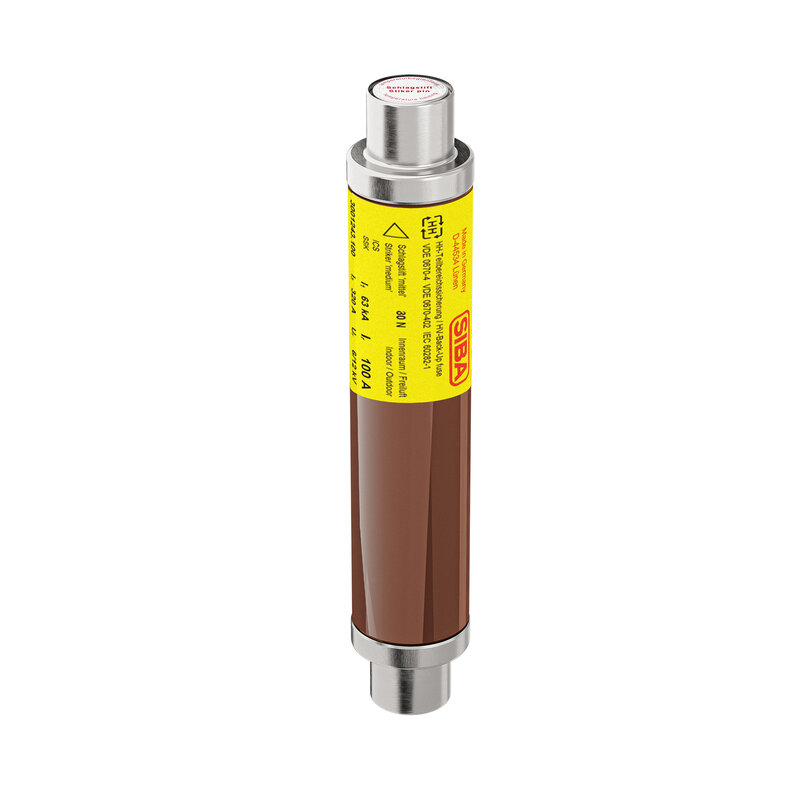
3001243 Fuse-Link
- Size
- Dimensions
- e=292
- Rated current
- 63A - 100A
- Rated voltage
- 6/12 kV
- Characteristic
- Back-Up
- Rated breaking capacity
- 63 kA